
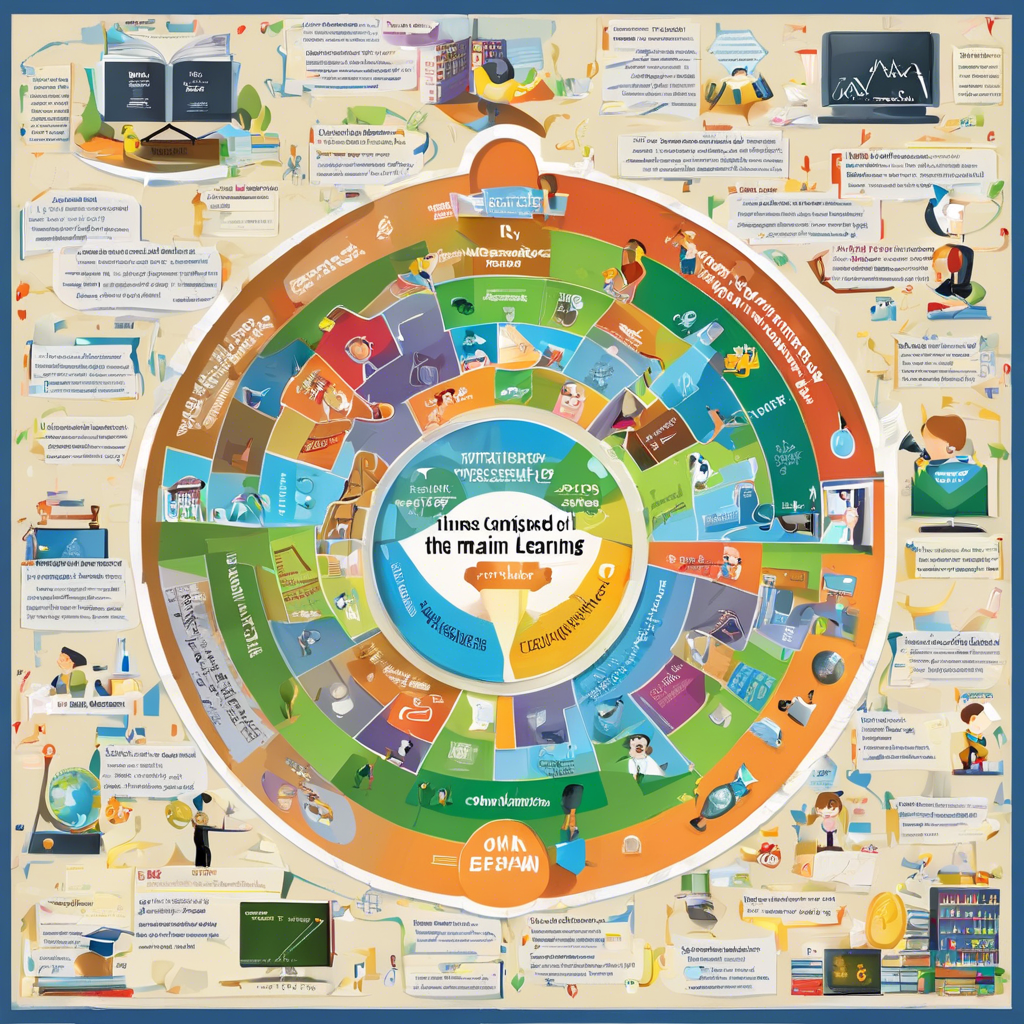
Learning is the foundation of human progress, shaping the way individuals acquire knowledge, develop skills, and adapt to new challenges. At its core, learning is a dynamic process that involves cognitive, emotional, and social aspects, influencing personal growth and societal advancement. Whether formal or informal, structured or unstructured, learning is essential in every stage of life, from childhood education to professional development and lifelong self-improvement. Understanding how learning works, the factors that enhance it, and the methods that optimize knowledge retention can empower individuals to achieve their full potential.
The Science Behind Learning
The human brain is designed for learning, with neural pathways constantly evolving based on experiences and acquired information. Neuroscientists have identified key mechanisms that drive learning, including synaptic plasticity, reinforcement learning, and memory consolidation. When exposed to new information, the brain strengthens connections between neurons, reinforcing pathways that facilitate recall and application. Studies show that repetition, active engagement, and emotional connection enhance memory retention, making learning more effective. Cognitive psychologists emphasize the importance of metacognition, or awareness of one’s learning process, in improving comprehension and problem-solving abilities.
Different learning theories explain how knowledge is absorbed and retained. Behaviorism focuses on reinforcement and conditioning, suggesting that rewards and consequences shape learning. Cognitivism highlights mental processes such as perception, memory, and reasoning, emphasizing structured instruction and problem-solving. Constructivism, pioneered by Jean Piaget, proposes that learners construct knowledge through experiences and interactions, making learning a personal and contextual process. Experiential learning, promoted by David Kolb, stresses the role of direct experiences in knowledge acquisition, particularly through hands-on activities and real-world applications.
Effective Learning Strategies
Maximizing learning efficiency requires adopting strategies that align with cognitive processes. Some of the most effective techniques include:
- Spaced Repetition – Revisiting information at increasing intervals to strengthen long-term memory.
- Active Recall – Testing oneself on learned material to enhance retention and application.
- Interleaving – Mixing different topics or skills during study sessions to improve adaptability and problem-solving.
- Elaboration – Explaining concepts in one’s own words to deepen understanding.
- Dual Coding – Combining verbal and visual information (e.g., diagrams, infographics) to reinforce learning.
- Mnemonics & Chunking – Using memory aids and breaking information into smaller, meaningful units.
In addition to these strategies, fostering curiosity, critical thinking, and reflective learning can lead to better outcomes. Encouraging discussions, engaging in hands-on projects, and applying knowledge in real-world scenarios all contribute to a more effective and enjoyable learning experience.
The Role of Technology in Learning
The digital revolution has transformed education, making knowledge more accessible and interactive. Online platforms, educational apps, and artificial intelligence-powered tools provide personalized learning experiences tailored to individual needs. E-learning platforms such as Coursera, Khan Academy, and Udemy offer flexible, self-paced courses covering a wide range of subjects.
Virtual reality (VR) and augmented reality (AR) are enhancing experiential learning by creating immersive environments where students can explore historical events, conduct virtual lab experiments, or practice medical procedures. AI-driven chatbots and tutoring systems offer real-time feedback, helping learners address gaps in understanding. Gamification, incorporating elements of competition and rewards, boosts engagement and motivation.
Despite these advancements, the digital divide remains a challenge, with disparities in access to technology affecting learning opportunities. Bridging this gap requires investment in digital infrastructure, affordable internet access, and inclusive learning resources.
The Importance of Emotional and Social Learning
Beyond acquiring academic knowledge, emotional intelligence and social learning play a crucial role in overall development. Research highlights the impact of emotions on learning, showing that positive feelings enhance cognitive function, while stress and anxiety hinder retention and problem-solving abilities. Creating supportive and inclusive learning environments fosters motivation and resilience.
Social learning, as described by psychologist Albert Bandura, emphasizes learning through observation, imitation, and interaction. Collaborative activities, peer discussions, and mentorship programs encourage shared knowledge and diverse perspectives. Schools and organizations are increasingly integrating social-emotional learning (SEL) programs, teaching skills such as empathy, communication, and conflict resolution to prepare individuals for personal and professional success.
Learning in the Workplace and Professional Development
Lifelong learning is essential in today’s fast-changing world, where technological advancements and industry demands require continuous skill development. Companies invest in employee training programs, workshops, and mentorship initiatives to enhance productivity and innovation. Online certification courses, microlearning modules, and knowledge-sharing communities support professional growth.
The demand for soft skills, such as adaptability, critical thinking, and leadership, has grown alongside technical expertise. Employers seek individuals who embrace a growth mindset—viewing challenges as opportunities to learn and improve. Encouraging workplace learning cultures, where employees engage in continuous education, leads to higher job satisfaction and career advancement.
The Future of Learning
As education evolves, personalized and adaptive learning will play a central role in shaping the future. AI-powered systems can analyze individual learning patterns and customize content accordingly, providing targeted support. Hybrid learning models, blending traditional classroom instruction with digital resources, offer flexibility and accessibility.
The rise of alternative education models, such as self-directed learning, competency-based education, and project-based learning, reflects the need for diverse approaches to knowledge acquisition. Lifelong learning will become an integral part of personal and professional development, empowering individuals to adapt to an ever-changing world.
Conclusion
Learning is a lifelong journey that influences every aspect of human development, from academic achievements to career growth and personal fulfillment. Understanding the science behind learning, adopting effective strategies, leveraging technology, and fostering emotional intelligence all contribute to a richer and more impactful learning experience. Whether in schools, workplaces, or self-directed settings, continuous learning remains the key to innovation, adaptability, and success in an ever-evolving world.